
Bosnia
Corn
BOJAN LAZIC
I sat down with Bojan Lazic on April 20, 2025, to interview him over Zoom on what his idea of home was and how he feels about his homeland. Bojan and I met through a mutual acquaintance— a close family friend of mine is his neighbor.
If you ask Bojan Lazic, what were your initial reactions to America, he can only reply, “corn.” But we’re getting ahead of ourselves.
Born in 1984, in a country that no longer exists, Bojan grew up in a former federal socialist republic inside of Yugoslavia. These days, it is called Bosnia and Herzegovina. Whatever the country may be called, though, Bojan can remember Doboj, the city he lived in until he was thirteen. He remembers the building he lived in, the yellow, red and brown high-rises that surrounded it, the huge playground in between where he learned to ride a bike. Bosnia is a very hilly country, so when it snowed, he and his friends spent their time outside, “just sledding for days, for hours, and hours, and hours.” When the seasons changed and summer came, they would go to a local river to swim, taking corn from the fields surrounding the river, grilling and eating it while they swam.
Bojan can also remember the civil war, which took place from 1992 to 1995. Fought primarily between Serbian Eastern Orthodox Christians and Bosniak Muslims, it did not make life easy for him and his family. “I am from a mixed family,” he explains, “my dad is a Serb, Eastern Orthodox Christian, and my mom is a Muslim, a Bosniak. So basically, we’re from a mixed marriage, and it was tough to live in a society where there was a war between, you know, those two different groups.” However, there was a U.S. program that allowed people from mixed marriages to apply to come and live in America, and Bojan’s family applied and were approved, coming to America in 1997, two years after the end of the war. They first settled in Marengo, Illinois, a city around an hour and fifteen minutes from Chicago. Bojan’s mother had a cousin that was sponsored by a local church, able to settle in Marengo. That cousin in turn sponsored Bojan and his family, and once Bojan’s family had successfully settled, they sponsored other family members. This is a common story for Bosnian immigrants. These successful chains of sponsoring have contributed to the creation of a prominent Bosnian diaspora in major U.S. cities like Chicago, St. Louis, and Detroit.
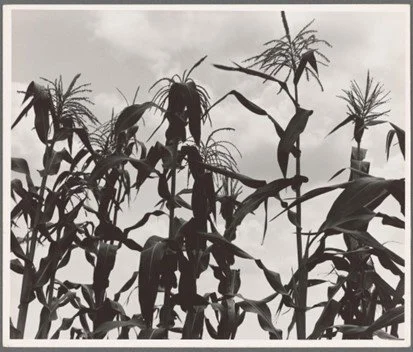
Corn, it so happened, ended up being a surprising link between Bojan’s Bosnian homeland and America. Bojan’s childhood summers in Bosnia were often spent snatching corn from the fields around the river in Doboj, cooking and eating it with his friends, an easier, peaceful time in his life. Corn “represented simplicity of life,” he explains; later, corn ended up “kind of” representing America. Prior to his arrival in the States, Bojan’s image of America had largely been shaped by American media: “They would show this city of Chicago, Los Angeles, New York, and the richness, right, the huge houses, the people. And that’s the picture of America that I had, as a kid.” But when he arrived in America on June 17th, 1997, he did not see what he had expected. He recounts the bus ride from O’Hare to Marengo, “and all I see are cornfields. It’s nothing else, it’s cornfield after cornfield.” He laughs when he describes his cousin’s home, surrounded by— you guessed it, corn.
Rather than being a tie to the life he had in Bosnia, a comforting link, “it was a disappointment,” he admits: “you get here, and then you start driving from the airport, and you drive, and you drive, and all you see is corn and these little, poor towns.” Despite what he had presumed about America from the movies, his first impressions were that “it’s poor, it’s not much richer than what I used to live.” The town his family first settled in was vastly different from where he had grown up. Doboj was maybe 35,000 people at the time, a city full of hustle and bustle. The streets were always full of people going about their day, and the city radiated life. Marengo, Illinois, in his eyes, was maybe 5,000 people, and compared to Doboj, lifeless: “you drive a bike, you don’t see a person, you just see someone in a car, right?” The America he had come to live in was not the America he had seen on the screen, nor the America he knew in his mind. “So that was the first memory of America for a young kid, thirteen years old who doesn’t understand much. It was disappointment,” he admits, “Because I thought I was gonna be in a movie, not in Marengo.”
Marengo, though, had other Bosnian immigrants, which initially drew his family to the city. In fact, these larger diasporic communities were very important to Bojan’s family. After three years, the family left Marengo and “decided to move to Grand Rapids, Michigan, because there was a large Bosnian community there.” He did not stay in Grand Rapids forever, though, after attending the University of Michigan, he left Michigan to go to law school at the University of Iowa. When he’d finished school, he worked to get a job in Chicago. A life in Chicago was a goal for him for several reasons: “it’s a huge city, there’s Bosnians, there’s all sorts of different people so that’s where I wanted to live, I always wanted to live in Chicago itself,” and so when he got a job in Chicago, he took it and settled here.
Over twenty years have passed since his arrival to America, and Bojan is glad to be in Chicago, to be a part of the large Bosnian community in the city, a community that he calls “crucial for my happiness.” Bojan is married to a Bosnian woman, and they both work hard to preserve their culture for their three young children. Preserving that culture, though, is something he admits is almost impossible. Two of his children are currently in school, and though they speak Bosnian, English is the main language at their elementary school, and as they continue throughout the American education system, they will have fewer and fewer chances to speak Bosnian. They do take their children to Bosnia every summer, and because they're able to work remotely, they can spend plenty of time there. He’s glad his children can experience life in Bosnia, seeing it firsthand, rather than hear about it from an American viewpoint.
While Bojan is aware that people in America mostly know about Bosnia through the context of the civil war, he still isn’t happy with the way people see Bosnia. “So, you hear Bosnia, ‘oh yeah, there was a civil war, bad civil war, people were killing each other, and everything,’” he explains, “But Bosnia, yeah, there was a civil war, it’s a complicated history but it’s a beautiful place.” Bosnia is a remarkably diverse country, with Eastern Orthodox Christians, Muslims, Catholics and Jews that have been living together in peace more than not, one of those rare places “where you will see a Catholic church, Eastern Orthodox church, a mosque, a synagogue within a couple of blocks of each other.” He hears plenty about America’s multiculturalism, the ‘melting pot’ idea in America: “Well, whose America is this?” He admits that he just doesn’t like the fact that people perceive Bosnia as “this crazy place, where there was a civil war, and don’t see it as a country that’s really rich in history, that has been in existence for thousands of years.” Bojan is trying to make sure that his children can experience the rich history of Bosnia, a country that has Roman ruins, a nation rich in culture and history. “I think they just perceive it as this crazy place where there was a civil war. But it’s a lot more complicated and it’s a lot more beautiful, because it’s complicated,” he says. Bosnia is the root of some of his best childhood memories, of experiences that have stuck with him throughout his life. Bojan’s children get to spend six to seven weeks in Bosnia, where he grew up, six to seven weeks to experience Bosnian culture, language, and to get glimpses of the life their father used to live. They can have chances to experience Bosnia in a way that he did: days by the river, eating fresh corn, not a care in the world.
*This story, written by Lola Brooke, was an outcome of a student project created in HST 269: Museums, Memory, and Material Culture, taught by Amy M. Tyson at DePaul University in Spring 2025.
Public Domain photo of corn courtesy of New York Public Library's Digital Collections