
Brazil
Coffee FunneL
Desiree Lara
When Sirlene Lara applied for a U.S. visa in 1999, she never imagined America would become home. At her interview at the American Consulate in Brazil, she and her cousins told the officer they wanted to visit Disneyland. "We said, 'We want to go to Disneyland,' but that was not true," Sirlene recalled with a laugh. She had applied almost as a joke, never expecting approval. An hour later, all three had ten-year visas.
Sirlene grew up in Três Barras, Minas Gerais, a rural region known as Brazil's coffee state. Raised on a coffee farm, she spent her childhood helping plant and harvest coffee alongside her siblings and cousins. School lasted only part of the day; the rest was devoted to work at home and in the fields. Coffee was more than a crop—it was woven into daily life.
When she was ten years old, her father decided she should leave school because he believed a woman's place was at home. Years later, determined to continue her education, Sirlene left home. Although her plans were interrupted when her older sister was diagnosed with cancer, she eventually completed high school while helping care for her sister in Belo Horizonte. She later became an elementary school teacher, proud of earning the education she had fought so hard to finish.
In 1999, after her father suffered a serious eye injury, Sirlene decided to come to the United States. Her goal was simple: work for a few years, save money to help her parents, buy them a condominium, and return to Brazil to continue her own education. She expected to stay no longer than five years.
Chicago was never part of her dream. In fact, the United States had not even been her first choice.
"When I was eighteen or nineteen," she said, "I always thought if I ever left Brazil, I would go to Australia or somewhere else. I never planned to come to the United States."
Everything felt unfamiliar. Although she had studied some English in school, she quickly realized how little she knew.
"Oh my gosh," she remembered of her first job at McDonald's, "I didn't know what lettuce was, what a tomato was in English."
She worked hard, learned the language, and eventually found a job at a coffee shop on North Michigan Avenue. Making coffee for customers reminded her of home, even though it wasn't prepared the way she had learned as a child.
It was there that she met Rodolfo Lara, the building's catering supervisor. He came in every day for a white chocolate mocha, insisting Sirlene made it better than anyone else. Their friendship gradually grew, and after Sirlene met his young daughter—whom Rodolfo was raising as a single father—she began babysitting from time to time. Although she had never planned to marry because she expected to return to Brazil, she found herself building a life with Rodolfo instead.
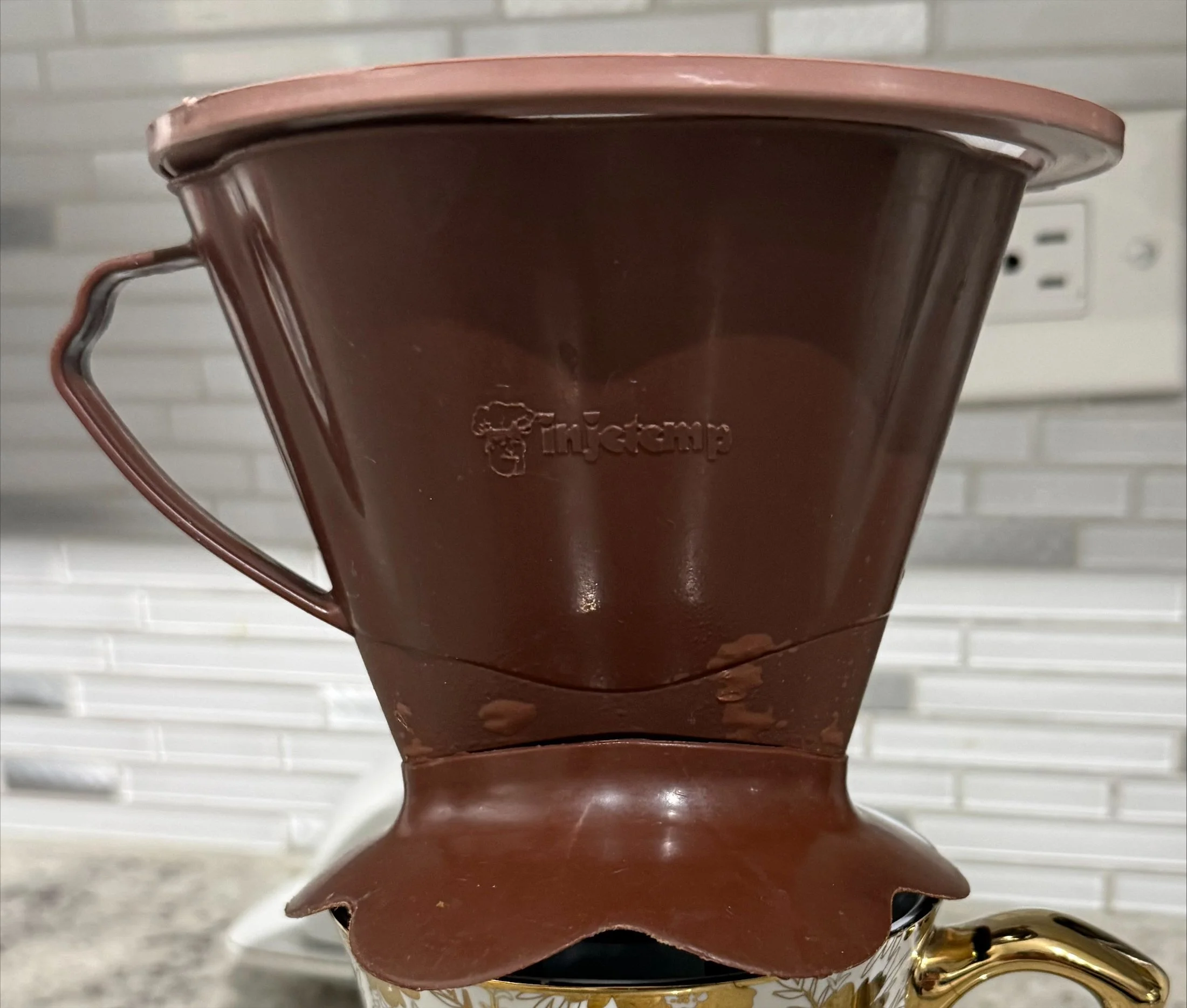
Nearly ten years passed before Sirlene returned to Brazil to visit her parents. She arrived carrying suitcases full of gifts for family and friends. When it was time to return to Chicago, she packed one small item for herself: a brown-and-white coffee funnel with a reusable cloth filter.
That coffee funnel has become one of her most treasured possessions.
In Minas Gerais, offering coffee is a gesture of welcome. Visitors are greeted with a fresh cup, and refusing one can even seem impolite.
"If you visit someone," Sirlene said, "they offer you coffee. If you don't drink it, they get offended."
Every trip back to Brazil includes bringing home extra paper filters, though she still prefers the traditional washable cloth filter that came with the set. Decades after immigrating, she continues to prepare coffee exactly as her mother taught her.
"You cook the water with sugar, then you make your coffee," she explained. "It is like religion."
Each morning, she pours hot water through the filter into the waiting pot, filling her kitchen with a familiar aroma before sitting down to coffee, bread, and cheese. It is the same ritual she knew growing up on a coffee farm in Minas Gerais.
The coffee funnel is more than a kitchen tool. It connects Sirlene to the place she left behind, to the parents she came to support, and to the childhood that shaped her. It also connects generations. She has passed the tradition on to her daughters, teaching them to prepare coffee the same way her own mother taught her.
What began as a temporary move became a permanent life. Sirlene eventually married, raised a family, became a United States citizen in 2016, and built a home in Chicago. She even made it to Disneyland. But the return to Brazil that she once imagined never happened in the way she expected.
But every morning, when she reaches for her coffee funnel, a small piece of Brazil is waiting for her.
By Desiree Lara, based on interviews with her stepmother, Sirlene Lara.